The T-shaped professional is a good idea that stops one step short. Breadth across the top, depth in the pillar: that's the right shape for an individual. But the real leverage in product management comes from combining diverse Ts into one organization. I call the result the box-shaped product team, a synthesis of individual competencies that is more than the sum of its parts.
McKinsey & Company frames the individual version well: "For any given role, some skill requirements are universal. Every team member may need to be comfortable working with data, or solving problems in a structured way, for example. Beyond those basics, however, they will also want to develop a deeper understanding of topics that allow them to make a real difference in their job. The result is a T-shaped skills profile, with a broad set of generally applicable skills, supplemented by a spike of specific expertise."
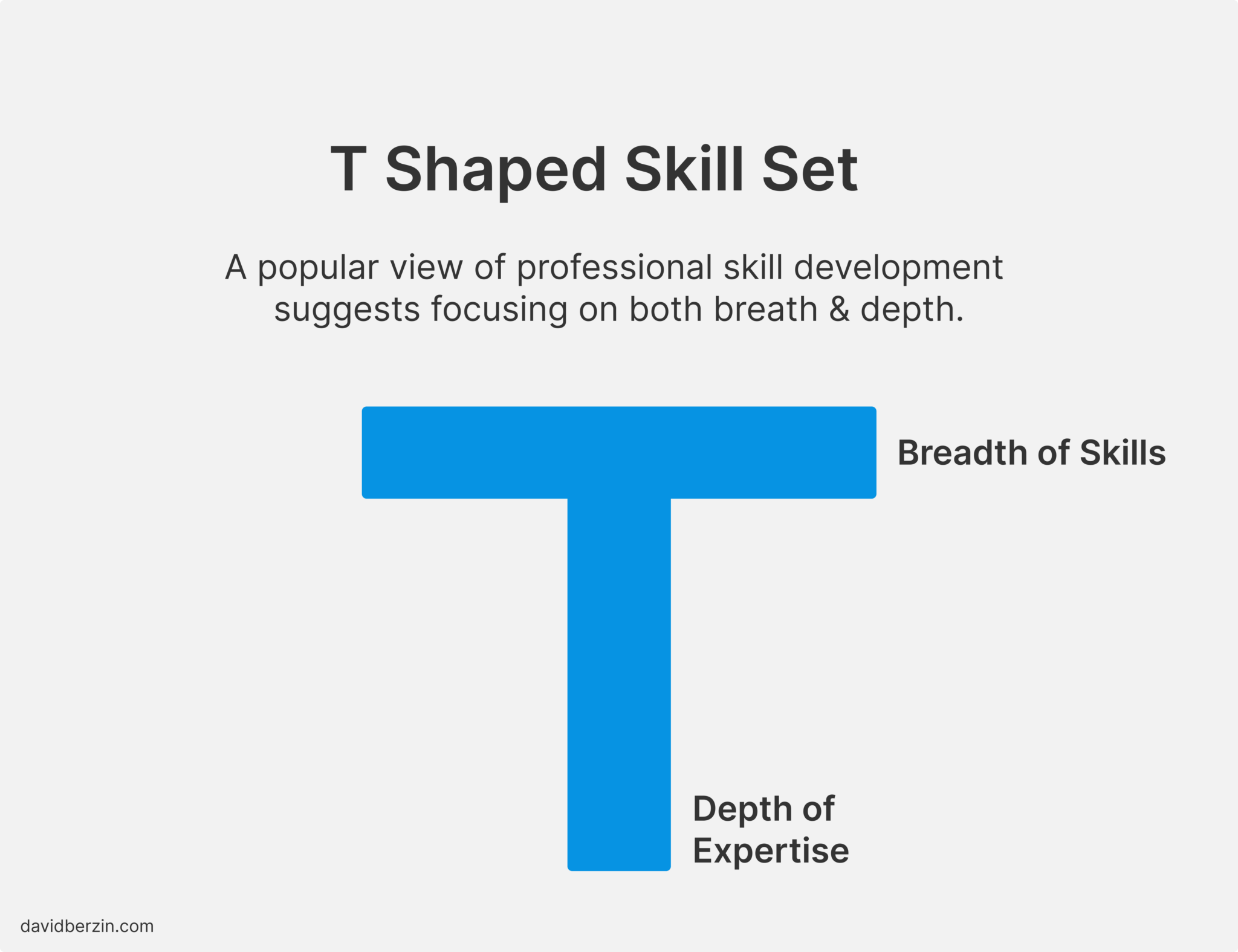
T-shaped skills matter especially in product management, a renaissance role that mixes hard research, design, data, and technical skills with softer collaboration, communication, and consensus-building across diverse partners. In my product leadership roles, I work on two things at once: developing my own T, and building an organization of strong, diverse Ts.
The top of the T: the default PM curriculum
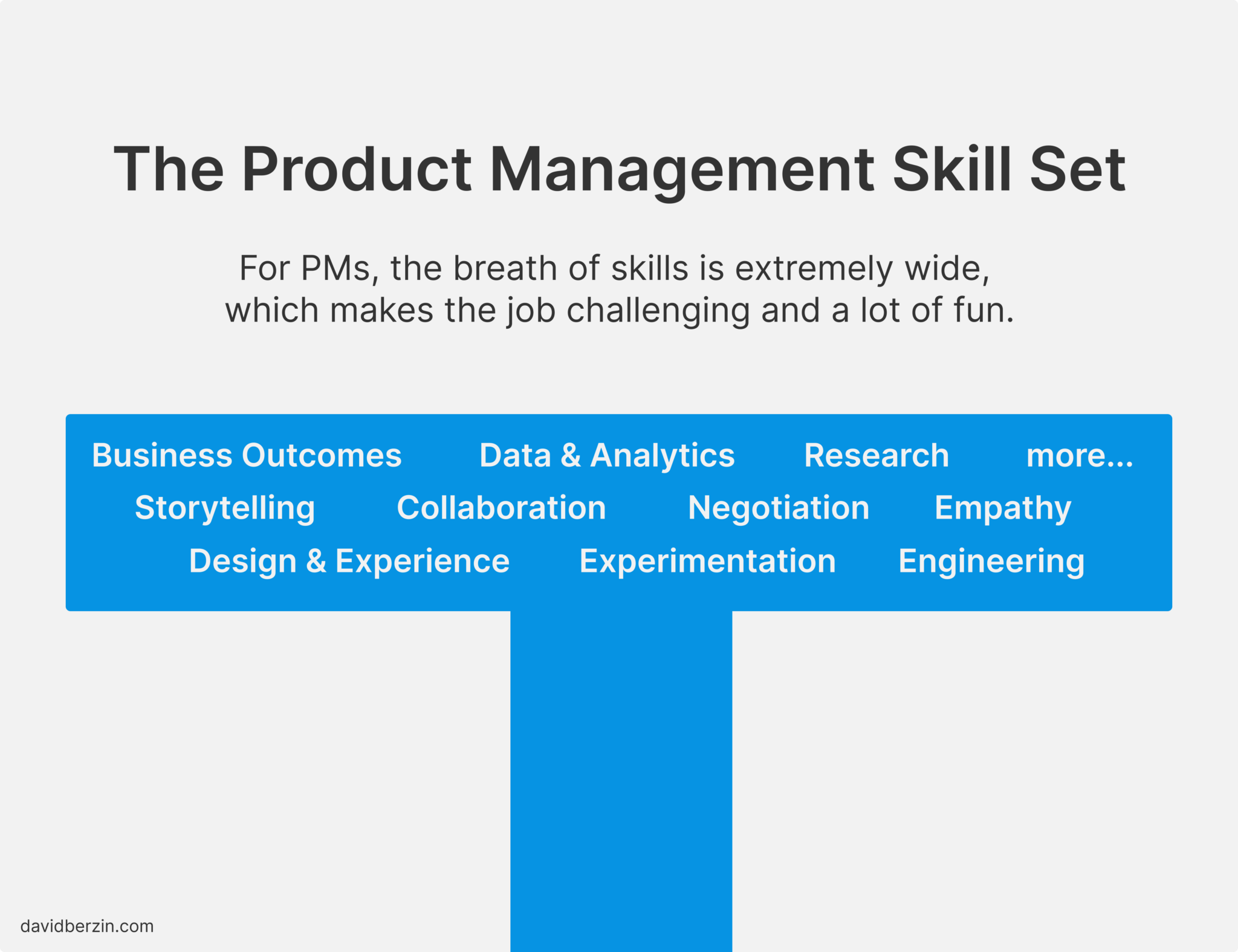
The PM skill set is diverse, ranging from business strategy to experience design to quantitative analysis. There are parallels in my personal life: I'm a lifelong musician who started on piano, then added guitar, bass, drums, production, and vocals.
Better still, the curriculum keeps changing. A decade ago the archetype PM was an ex-Google engineer, immersed in coding and architecture. Half a decade later, the pendulum swung to customer-centric experience design. Today I consider the product role fundamentally a data and business one, in constant conversation with operational, technical, design, and quantitative teammates.
I engage my teams in an ongoing dialogue to define and refine this "top of the T," and push for continuous learning through 1:1s, pairing, book clubs, external mentorships, and online education.
The pillar of the T: each team member's specialization
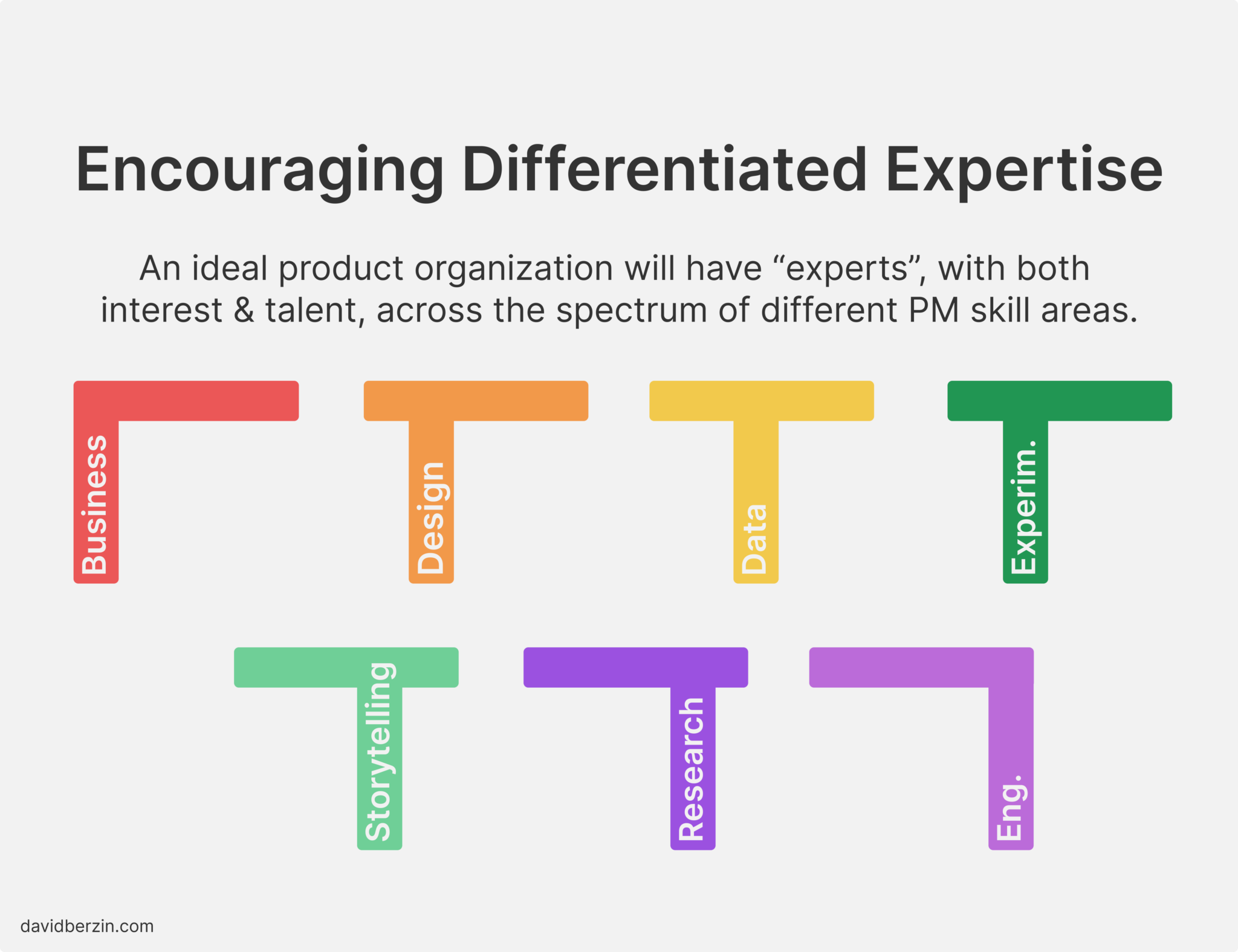
Beyond the foundational skills, I encourage every team member to build deep expertise in the segments of the PM curriculum that match their interests and abilities. Teams are better when we fully support, and enjoy, each member's natural strengths. Peter Drucker probably went overboard when he said "to focus on one's weakness at work is misuse, if not abuse of the person," but Drucker knew where the upside was.
A case in point from my time leading Viacom's social data product team: Brian, with a technical predisposition, went deep on algorithms alongside our data scientists. Tanmay refined public speaking and presentation to a high polish. The collective growth in individual specializations, layered on shared PM fundamentals, up-leveled the team's impact and carried both of them into executive management roles.
A super team: a symphony of diverse Ts
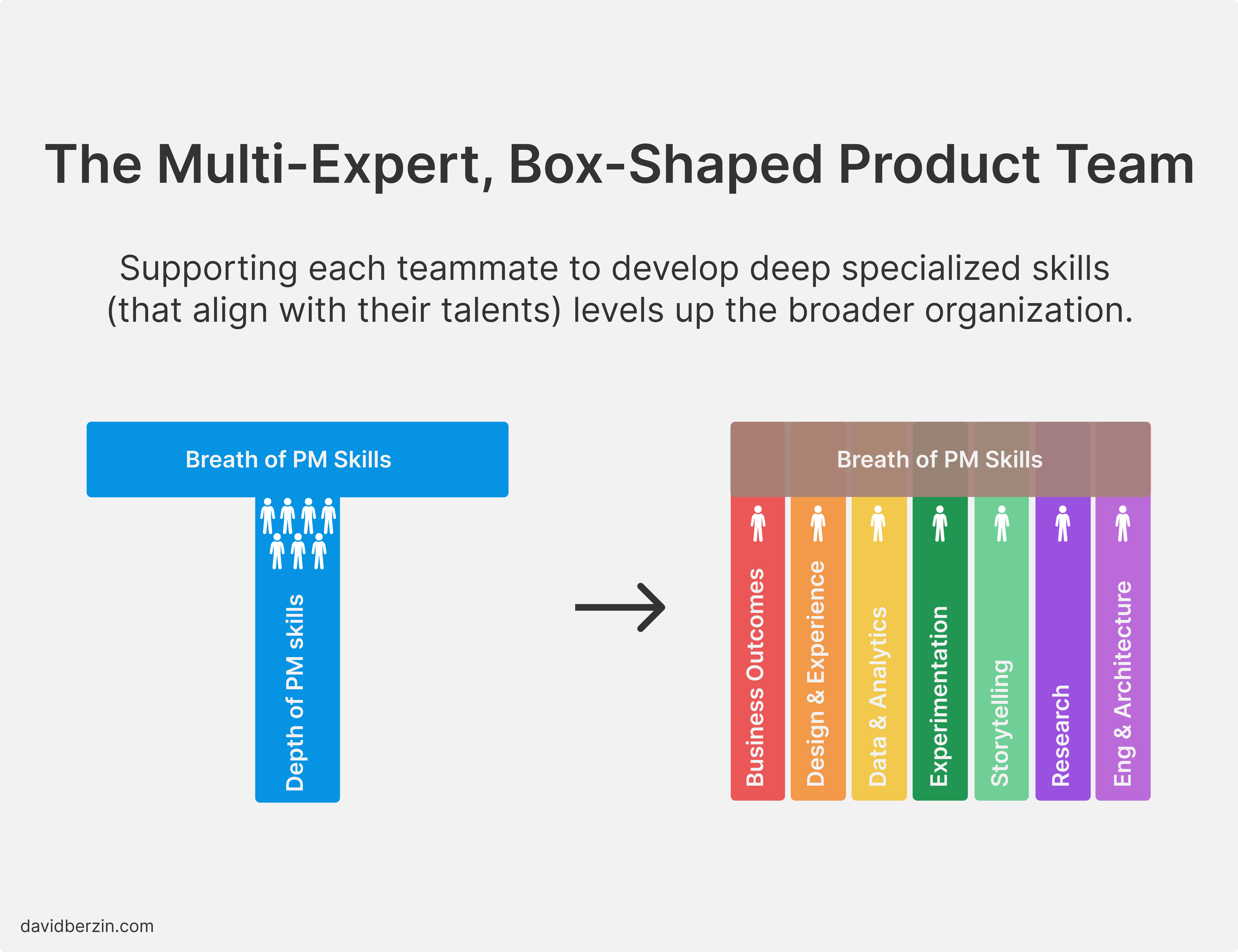
Grow both the breadth and the diverse depths and you get a team of specialized experts with a common framework for getting jobs done. The organization has superpowers across the top of the T, and teammates pursuing their strengths. Every member's depth amplifies the collective capability.
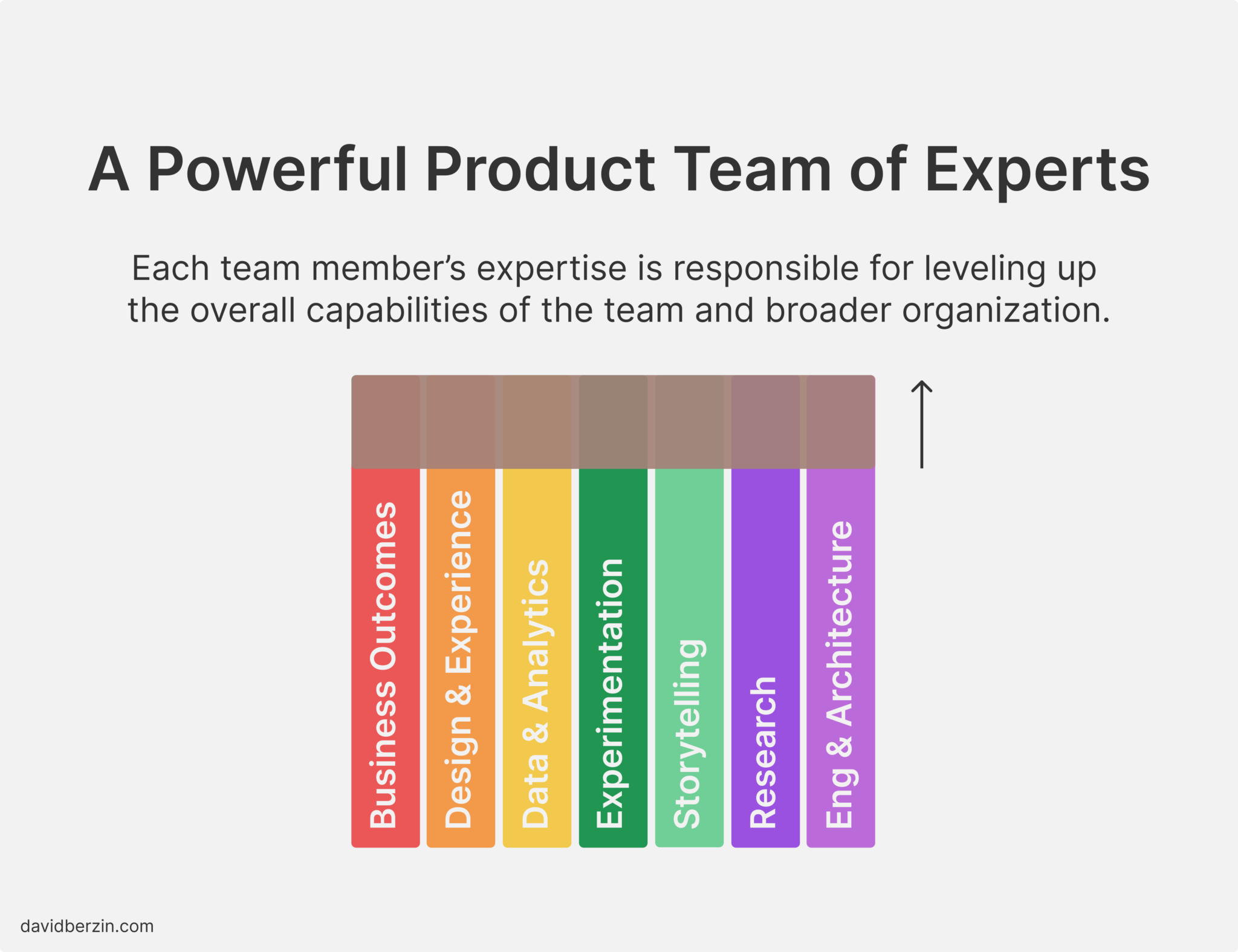
Together we form a box: a rising, rock-solid top-of-the-T with deep strength across multiple functional areas. Like a band of varied instruments playing from the same score, the mix of shared skills and diverse specializations produces an organization that is skilled, innovative, and ready for whatever comes next.